

800kW Manufacturing Plant, U.S
 Aug 14, 2026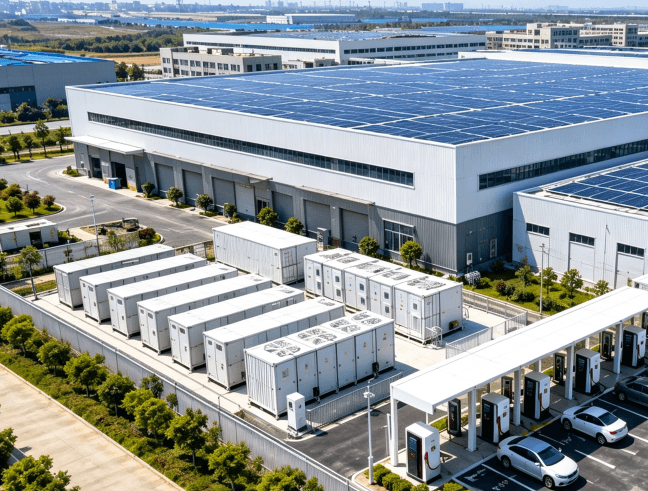
PROBLEM
The facility — an 800 kW average‑load U.S. manufacturing plant — faced two linked problems:
- Unstable grid power: 3–5 weather‑related outages per year, any one of which could shut down production.
- High energy costs: Average effective rate of ~$0.28/kWh, with demand charges and diesel backup adding to the bill.
- No dispatchable clean‑energy asset: The plant relied on diesel generation as its only backup, running roughly 500 hours per year.
Without storage or smart control, solar could not be counted on to cover the load, and every grid event became a production risk.
SOLUTION
System Configuration:
- 1.5 MW solar PV array — on‑site clean power generation
- 600 kW / 1,205 kWh battery storage — peak shaving, load shifting, and short‑duration outage bridging
- 1,200 kW backup diesel generator — final reserve for extended outages
- Energy Management System (EMS) — with integrated PCS, BMS, and anti‑islanding protection
System Capabilities:
- Prioritizes solar self‑consumption in real time
- Charges storage during off‑peak / excess‑solar periods
- Discharges during peak demand windows to shave demand charges
- Automatically starts diesel only when solar + storage cannot cover the load
- Maintains grid‑tie operation with optional sell‑back
RESULT
After the first 3 months of operation:
- 0 production‑stopping grid events
- Average effective rate: reduced from ~0.28/kWhto 0.28/kWhto 0.20/kWh
- Diesel runtime: reduced from ~500 hrs/year to ~80 hrs/year (emergency / test only)
- Projected payback period: 5–7 years
Energy cost savings and production resilience improved together.
BENEFIT
The plant now has a stable, clean power supply that delivers:
- Smarter load dispatch — EMS optimizes generation, storage, and grid draw 24/7
- Reduced grid dependence — solar + storage cover most operational hours
- Improved energy economics — lower effective rate and lower demand charges
- Lower carbon emissions — less diesel and higher on‑site renewable use
- Protected production — no more outage‑related downtime